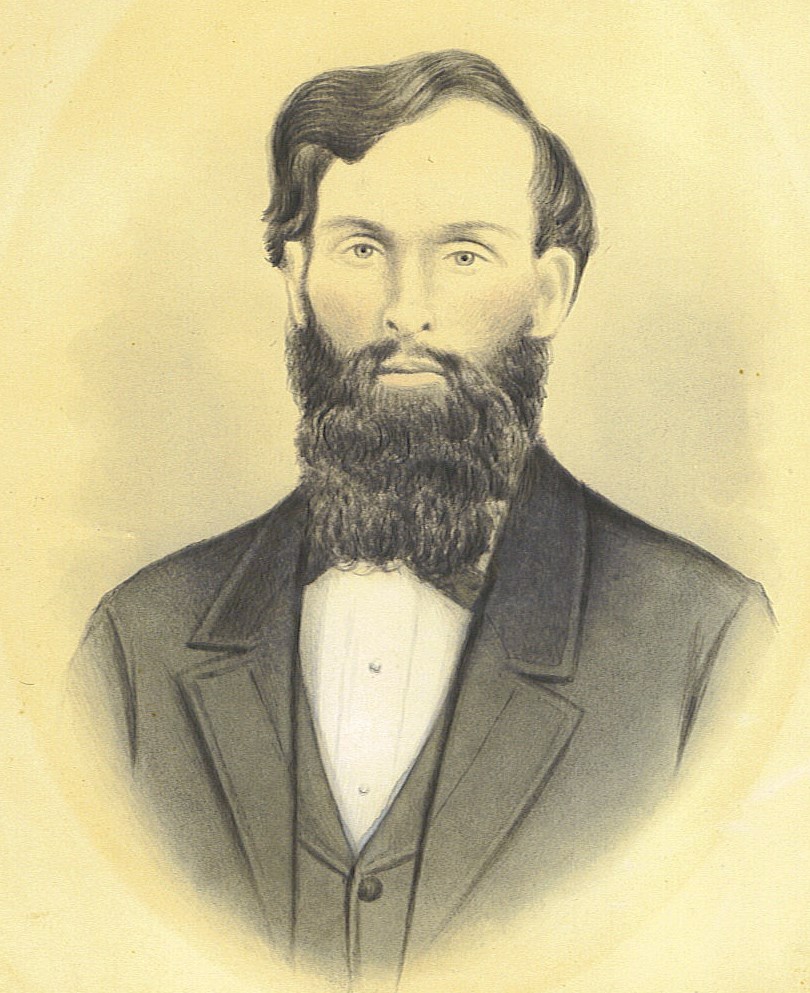
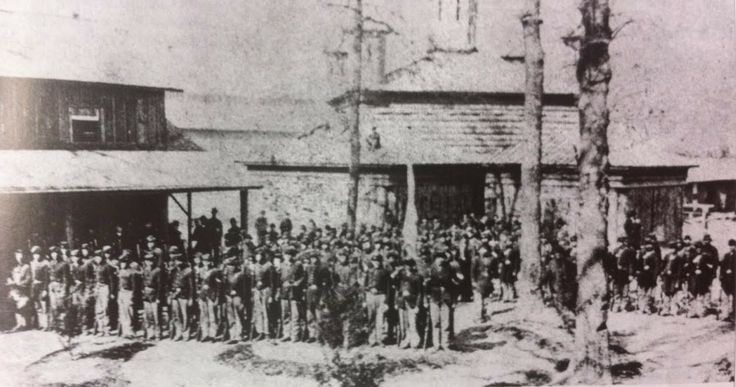
Benjamin B. Ensminger 120th Indiana Inf.

Posted in 120th Indiana Infantry with tags , , , , , , , , on June 20, 2015 by 40thindiana

eagle

Crawfordsville Daily Journal

Thursday, July 13, 1865

We regret to learn that our fellow townsman Corporal B.B. Ensminger, of Company B, 120th Indiana Volunteers, departed this life on the 24th of June, in a hospital at Petersburg, Va. – Mr. B had been furloughed and was on his way home on a short visit, when an accident befell him – crushed between two railroad cars – causing his death on the following day. He leaves a wife and several small children, and a host of friends to mourn his loss.

Crawfordsville Daily Journal

Thursday, July 20, 1865

Camp Near Charlotte N.C., July 2, 1865

Ed. Journal: While enjoying the amusements of camp life under the genial rays of peace highly appreciated by the soldier, the sudden announcement of the death of Corporal Benjamin B. Emsminger, Company B, 120th Indiana Volunteers, has sent a deep pang of grief to the hearts of his numerous friends throughout the Regiment, and especially the members of our company. As to the particulars of the accident that resulted in his death, we are not advised.

Corporal Ensminger enlisted in the service of his country, December 25th, 1863, at Crawfordsville, Indiana; and on the 30th of January; 1864, he was mustered in with the company at Lafayette, Ind. on the 20t the part of a gallant soldierh of March, ’64, the Regiment took the train at Indianapolis for Louisville, Ky. Remaining at that place a few days, we proceeded by rail to Nashville, and from there marched to Charleston, Tenn. On the 3rd of May, we started from that place on the campaign which resulted in the fall of Atlanta. During that eventful campaign the deceased acted nobly the part of a gallant soldier, and was in every battle or skirmish in which the regiment or company was engaged. Afterward in the battles of Spring Hill, Franklin, and Nashville, he performed his whole duty. At Kinston, N.C., on the 10th of March, 1865, he bravely faced the dangers of another hard fought battle. During the entire period of his service, he was never absent from duty an hour without leave; brave, kind and generous, he was beloved by all who knew him.

cox

Lt. Esaias Cox, Company B, 120th Ind. Cox resided in Franklin Twp.

This P.M. at a meeting of the members of the Company, and the friends of the deceased generally, called for the purpose of adopting resolutions expressive of our feelings,

On motion, Lieut.-Col. R.C. Kise, commanding the regiment, was called to Chair, and Sergt. I.R. McClaskey chosen Secretary.

Col. Kise then in a few touching remarks stated the object of the meeting.

Col. Kise, Capt. McClaskey and Lieut. Cox being appointed a committee, reported the following Preamble and Resolutions, which were unanimously adopted;

Whereas, Under the dispensation of an all wise Providence, out esteemed comrade and fellow soldier, Benjamin B. Ensminger, Corporal, company B, 120th Regiment Indiana Volunteers, has been removed from our midst by the irresistible hand of death – the result of a sad and deplorable accident; therefore be it

Resolved, That in his death the service has lost a gallant soldier and society an honorable and exemplary gentleman; and be it further

Resolved That while the gallant departed was unflinching in the discharge of his duty as a soldier and as a man, and his hand ever open to the wants of his comrads, and his heart always beating with sympathy for the suffering, we will cherish and hold in honored remembrance, till life’s latest throb, the noble qualities of the one whose loss we mourn do deeply.

Resolved ,  That we deeply sympathize with the bereaved relatives and friends of the deceased, and with our condolence, tender them the condolatory assurance that as a soldier Corporal Ensminger was always prompt in the discharge of his duty, regardless of danger, and that as a companion and gentleman, his conduct was ever such as to win the esteem of all who knew him.

Resolved, That as a testimonial of our grief for our fellow comrade, we wear the usual badge of mourning for the period of thirty days.

Resolved, That copies of the proceedings of this meeting be furnished to the family of the deceased; and also to the editors of the Crawfordsville Review and Journal for publication.

Liet. – Col. R.C. Kise, President

Sergt. I.R. McClaskey, Secretary

Lorenzo Stone

Posted in 38th Indiana Infantry with tags , , , on June 15, 2015 by 40thindiana

stone

L. D. Stone, furniture, Waveland, was born in Clark county, Kentucky, Semptember 15, 1825, and is the son of William and Nancy (Oliver) Stone, who were of Clark county, Kentucky, and moved to Jennings county, Indiana, about 1830, thence to Orange county in 1833, where the father died in 1840 and mother in 1869. The subject of this sketch was raised on a farm till fifteen years of age, after which he learned the cabinet-maker’s trade, and in 1856 he came to Waveland and engaged in his present business. In 1861 he enlisted in the 38th Indiana Infantry Regiment (Co. H)., and served three years. He was in the battles of Stone River, Chaplin Hills (Perryville), Mission Ridge, Chickamauga, and Jonesboro, and a great many skirmishes. After serving his country faithfully for three years he was honorably discharged and returned to Waveland and resumed his former business.

Lorenzo Stone was buried in Ames Cemetery, Paoli, Orange County, Indiana

Death of Captain Charles H. Bruce

Posted in 58th Indiana Infantry, First Hand Letters & Accounts with tags , , , , , on June 12, 2015 by 40thindiana

bruce

Captain Charles H. Bruce (Ladoga, IN.), company K, 58th Indiana Infantry

Charles H. Bruce was a resident of Clark Twp., Montgomery County, Indiana. According to the 1860 Census, he was the oldest child living at home, and worked on his widowed mothers farm. November 22, 1861 Charles went to Ladoga, where he enlisted as a member of the 58th Indiana Infantry, he was quickly elected to the position of 1st Lieutenant. After seven months in the field, Lt. Bruce was promoted to the rank of captain, filling a vacancy in Company K.. Captain Bruce would lead his company during the battle of Stones River and also the 1863 Tullahoma (Tennessee) Campaign. In the late afternoon of September 19, 1863, the 58th Indiana would see action at the battle of Chickamauga, Georgia. The 58th would become heavily engaged in action around the Tabler Viniard farm. The action here was very violent and confusing. At one point, the 58th Indiana had to cross  a fence near the Viniard home, as a Union artillery battery was in wild retreat. The battery went right through the regiment, and Company K, along with two other companies, became separated from the rest of the regiment. They were facing Hood’s hard fighting “Texas Brigade,’ that had arrived by rail from Robert E. Lee’s ‘Army of Northern Virginia.’  Captain Bruce and Company K tried to advance against a storm of lead, they then attempted to make a stand and hold their ground. Survivors of the battle stated at this point in the fight, the smoke was so thick from small arms and artillery fire, they could hardly see anything. The fighting around the Viniard Farm would soon become ‘up close and personal’ with hand to hand fighting. The battle lines would later stabilize, but the slugfest would continue into the evening.  It was sometime during these actions that Captain Bruce was mortally wounded by two gunshots, he would expire the next day.

(For those  planning a visit to Chickamauga National Battlefield Park, this action took place on the Vinard Farm, which is located at the intersection of the Viniard-Alexander Road & Lafayette Road.)

Crawfordsville Daily Journal

Thursday, October 8, 1863

Death of Capt. Bruce

Chattanooga, Tenn., September 23d,1863 – Captain Charles H. Bruce! He is fallen! The Noble, generous patriot is gone! He no more battles for the liberties of his enemy! He no longer moves among those who so loved him! He no longer leads on to victory the noble little band of heroes, who enlisted to follow him wherever the fortunes of war and the goal of his country called! True to his country’s interests, he entered the army at the outbreak of the rebellion, and has ever since served with credit and distinction both as a “staff officer” and Company Commander. None knew him not to respect and love him! His gallant men lose a noble and efficient leader. His widowed mother loses an affectionate protector!  Capt. Bruce was mortally wounded, September 19, 1863, while gallantly leading his men in a “bayonet charge” against the rebel forces on Chickamauga Creek, and died at 7 o’clock on the following day. It was not until he had received the second shot that he consented to leave the battlefield. Although his wounds were of the most painful character , he endured them with humble submission, and uttered not a murmur at his sad and untimely fate. Well may his friends and comrades mourn the loss of one so brave, so generous, and so true!

H. C. Howard

Company K; 58th Reg’t Ind. Vols.

Captain William P. Herron

Posted in 72nd Indiana Infantry with tags , , , , , on June 11, 2015 by 40thindiana

 History of Montgomery County, Indiana. Indianapolis: AW Bowen, 1913, pp. 1201-1204.

Herron

CAPT. WILLIAM P. HERRON. In a brief sketch of any living citizen it is difficult to do him exact and impartial justice, not so much, however, for lack of space or words to set forth the familiar and passing events of his personal history, as for want of the perfect and well rounded conception of his whole life, which grows, develops and ripens, like fruit, to disclose its true and best flavor only when it is mellowed by time. Daily contact with the man so familiarizes us with his many virtues that we ordinarily overlook them and commonly underestimate their possessor. Nevertheless, while the man passes away, his deeds of virtue live on, and will in due time bear fruit and do him the justice which our (76) pen fails to record. There are however, a number of elements in the life record of Capt. William P. Herron, one of the most substantial and representative citizens of Crawfordsville and western Indiana, that even now serve as samples well worthy of emulation, and his fellow townsmen are not unappreciative of these. He is one of the progressive men of this section of the state, having spent his life in his native county of Montgomery where his forebears were early pioneers, his family having been prominent in the growth and civilization of the locality for the past three quarters of a century or more. He has done much toward the general development of his chosen city and has won and retained the confidence and good will of all who know him. He is a splendid example of the virile, progressive, self-made man, of keen discernment and sound judgment, and at the same time a follower of the principles embodied in the Golden Rule in all his relations with his fellow men, and therefore he has ever enjoyed their confidence and good will. Thus for many reasons the name of Captain Herron is eminently deserving of perpetuation on the pages of this history, not the least of which is the fact that he is an honored veteran of the greatest civil conflict the world has ever known, for none of our citizens could wear a greater badge of honor than the distinction of having served the government in the memorable four years of war between the states. Captain Herron, banker, widely known business man and enterprising citizen, was born in Montgomery county, Indiana, June 17, 1843, and is a son of James D. and Rebecca (Young) Herron. The father was born on January 26, 1798 in South Carolina and at an early age removed to Ohio. In 1825 he came as an early pioneer to Montgomery county, Indiana, and entered land from the government, establishing the family home thereon, and by hard work developed a good farm and became a very influential citizen among the early pioneers, and here he continued to reside until his death on October 21, 1874. His wife, Rebecca Young, was born November 2, 1802, in Ohio. Her parents were natives of Pennsylvania. The paternal grandparents of the Captain were Scotch people and they emigrated to America prior to the Revolutionary war, and the grandfather fought in that conflict of the colonies with Great Britain. He was taken prisoner by the English and was held by them for a period of two years. After his release he settled in South Carolina. Capt. Herron grew to manhood in his native county and received a good education in the common school. He was a student in Wabash College when in 1862 he laid aside his text-books and espoused the Union cause, having then been a student in that historic institution for a period of three years. He enlisted in Company B, Seventy-second Indiana Volunteer Infantry, but after the battle of Stone’s River, Tennessee, he was transferred to Wilder’s Brigade of Mounted Infantry and was made captain of his company. He participated in many important campaigns and hard-fought battles, proving, according to his comrades, to be a faithful and fearless soldier. He was severely wounded at the great battle of Chickamauga, by a piece of shell. He was also wounded in the engagement at Farmington, Tennessee. For a period of six months and during Wilson’s raid he acted as major, and at the close of the war was made a provost marshal of Macon, Georgia, his division capturing the Confederate President, Jefferson Davis. He recalls many interesting reminiscences of his military career. Thus after an enviable record as a soldier in defense of the stars and stripes he was honorably discharged in 1865. Mr. Herron is a member of McPherson Post, No. 7, Grand Army of the Republic, and a Past Senior Vice Commander of the Military Order of the Loyal Legion, Department of Indiana. His rough life had undermined his health, and for a period of three years thereafter he resided in the northwest, which at that time was very little developed, and there he recuperated his energy.

herronhome

Home of William Herron at 406 W. Wabash Ave., Crawfordsville. The home is now owned and occupied by Wabash College.

Returning to Crawfordsville in 1870 he engaged as a bookkeeper for a period of three years. In 1873 he was elected treasurer of Montgomery county, serving with satisfaction to the people until 1875, when he launched out into a business career, becoming president of the local gas company. His success as a business man has been continuous from that time until the present, and he has become one of the financially strong men in this section of the state and is widely known as a progressive and alert, broad-minded man of affairs. He is at this time president of the First National Bank of Crawfordsville, and president and treasurer of the Wire Nail Company. In these great industries he has been the principal motive force, his able management and wise counsel insuring success, and a large and rapidly growing business is carried on in each. He is, at the present time, secretary of the Board of Trustees of the State School for the Deaf, and a member of the Military Park Commission. Having been known as a man of exemplary habits from his youth he has ever enjoyed the confidence and good will of all who have come into contact with him and is universally respected as a business man and citizen. Captain Herron was married on January 20, 1875, to Ada Patton, a lady of culture and the representative of an excellent family of Lafayette, Indiana, of which she was a native and where she grew to womanhood and received a good education. This union has been blessed by the birth of six children, namely: Charles, who is a captain in the Twenty-third United States Infantry, now stationed at Fort Benjamin Harrison; Jessie is the wife of J. B. Stutzman, of Washington, D. C.; William P., Florence, Fred I. and Austin H. The Captain is a man of pleasing personal address, unassuming, charitable and obliging in his impulses, and is uniformly courteous.

DCIM100HPDVC

Grave of Capt. Herron, Oak Hill Cemetery, Crawfordsville, Indiana


James Cameron Fullenwider, 33rd Indiana Infantry

Posted in 33rd Indiana Infantry, Montgomery Regiments & Companies, Soldiers with tags , , , , , on June 9, 2015 by 40thindiana

fullenwider

James C. Fullenwider was born on the family farm in Brown Township, between the towns of Waveland and Browns Valley, 1838. His parents, Eleazer and Lavinia Allen  Fullenwider  had migrated to Montgomery County from Kentucky. James was the 9th child of eleven. When war swept over the country, the Fullenwider sons answered the call. James would have two brothers in the 40th Indiana Infantry, two brothers in the 55th Indiana Infantry, and one brother in the 78th Indiana Infantry.

On September 19, 1861, James enlisted in Company E, 33rd Indiana Volunteer Infantry Regiment. His company was primarily made up of men from Parke County, Indiana. The 33rd Indiana saw early action at Camp Wildcat, Ky., and later helped to  occupy Cumberland Gap. By early 1863 James and the 33rd were near Franklin, Tennessee, members of Col. John Colburn’s Brigade (Colburn was a Wabash College grad). This was during a period after the battle of Stones River, Confederate cavalrymen under Earl Van Dorn were very active in the Columbia  and Franklin Tennessee area.

On the morning of March 24, 1863, Coburn’s Brigade was sent out of Franklin, south on the Columbia Turnpike to probe Confederate cavalry forces actively engaged in interrupting Union supply lines. Coburn started out with his brigade, some cavalry and a small wagon train. Gen. Van Dorn, watching the Union column,  decided to try and draw Coburn away from reinforcements in Franklin and isolate it. Van Dorn would send small squads out to temporarily engage the Union brigade, then retreat, and engage once more. Basically a hit and run tactic. The hope was that Colburn would pursue the small Confederate force with his larger brigade. The trap was laid and Colburn took the bate. It came to a climax four miles outside of Franklin, in a small valley near Thompson’s Station. The enemy cavalry now started applying more pressure on the Union brigade., As Colburn started to fan out his brigades battle lines, the Confederates began to apply more pressure against him. Colburn pushed ahead to a small hilltop, knowing that high ground was a better position to be in and also hoping the trees would help protect his brigade flanks. At one point he 33rd and 85th Indiana tried to advance, but had to turn back. Now the Confederates started applying their numbers. A Confederate cavalry brigade under William Hicks “Red” Jackson was dismounted; making  bold frontal assaults. Another force under Nathan Bedford Forrest, started chipping away at Colburn by attacking the flank and rear of his Union brigade.  James and the 33rd, as well as the 85th Indiana were fighting for dear life on the right side of the Columbia Turnpike. The Confederates were pushing in and closing the distance to the Colburn’s battle line. Eventually the pressure and numbers became to much, Colburn’s lines started to waver and collapse. Colburn was eventually left with no other choice, but to surrender his command. 33rdin

The 33rd Indiana Infantry in the field near Franklin., 1863. This image was taken before the battle of Thompson’s Station.

James Fullenwider and the 33rd Indiana fought well that day, but their commander had been drawn in to a trap. It became apparent to the men that they were outnumbered and outmaneuvered. Sometime during this action, James C. Fullenwider was killed in this action. The grave of James cannot be located in any of the National Cemetery’s databases, It is not really known what happened to his remains. There is a tombstone that contains his name and death date at the Waveland Presbyterian Cemetery, Waveland, Ind.  Robert “Bob” Fullenwider stated that “the remains of James are not there, his name was placed on the family stone in memory of him. ” This is the sad and terrible price of war, and it was to be repeated many times across Montgomery County.

Ambrose Remley, 72nd Indiana Infantry (Wilder’s Brigade)

Posted in 72nd Indiana Infantry, Books with tags , , , , , on June 8, 2015 by 40thindiana

Remley

Image of Ambrose Remley. He kept a detailed wartime diary that was printed into a book several years back.by the ‘Montgomery County Historical Society Inc.’

Ambrose Remley, farmer, Crawfordsville, was born September 25, 1836, in Union township, Montgomery County. The biography of his father will be found in the biographical portion of Union township. Mr. Remley spent his boyhood on the farm and in a tan-yard, and had a good common-school education. He enlisted in Co. E, 72d Ind. Vols., August 4, 1862. He fought in all the battles of the Atlanta campaign under Sherman, where for 100 days they were in almost continual fighting. He was at Hoover’s Gap, Chickamauga, Farmington, Still’s Tan-yard, Selma (Alabama), Kennesaw Mountain, Platt Shoals, Rome, and many skirmishes, being in all about fifty engagements. It is noble and patriotic to fight and face death on the battle-field for one’s country, especially when it is a free country. December 25, 1866, Mr. Remley received as a Christmas present Miss Minerva E. Shelly, She was born December 25, 1844. They have had four children: Isaac, F., born April 9, 1868, died August 31, 1869; Frederic S., born January 10, 1871; Harvey C., June 14, 1873; Sarah J., August 11, 1876. Mr. Remley has a good farm of 320 acres, upon which he has a nice two-story house, with other improvements good. He votes as he shot, with the republican party. He and his wife are both members of the Center Presbyterian Church of Crawfordsville. Mr. Remley is an intelligent, enterprising, and well-respected citizen.

72nd Indiana Infantry (Wilder’s Brigade) Compamy E

Posted in 72nd Indiana Infantry with tags , on June 8, 2015 by 40thindiana

Lemuel B. McClemrock. Company E, 72md Indiana

Lemuel B. McClemrock. Company E, 72md Indiana

72nd Indiana Regiment Company E Wilder’s Lightning Brigade

Capt. Harvey B. Wilson Resigned December 14, 1862

1st Lt. Lawson S. Kilborne Promoted Captain

2nd Lt. John N. Insley Promoted 1st Lieutenant  

2nd Lt. Lewis C. Priest Promoted 2nd Lieutenant, Died June 24, 1864

Sgt. Elijah Park Linden Deserted 11/21/62

Sgt. William Ashby Ladoga Died Gallatin, TN. 12/26/62

Sgt. James W. Medcaris Waynetown

Sgt. John W. Plunkett Waynetown Promoted 2nd Lieutenant

Cpl. Edward H. Cooningham Ladoga

Cpl. Simpson Montgomery Linden

Cpl. Lewis E. Wilhite Independence Mustered out as Sergeant

Cpl. Samuel C. Maxwell Ladoga

Cpl. David Shelby Lafayette

Cpl. William H. Mahan Thorntown Promoted to 2nd Lieutenant

Cpl. James Harris Crawfordsville

Musician Johann Greenburg Linden

Musician John Webster Ladoga Died at New Albany, no date

Wagoner Alfred P. Ellis Whitesville  

Privates

Avery, Whiting A. Ladoga

Albertson, Silas W. Linden

Barton, Madison Linden Discharged 9/30/63

Bible, John C. Sugar Grove

Campbell, John F. Ladoga Discharged 3/8/63

Chambers, Andrew J. Crawfordsville

Cobb, Uriah Lafayette

Coombes, John N. Linden Discharged 11/28/63

Coombes, Denman J. Pleasant Hill

Connell, Theodore B. Lafayette

Curnutt, Henry Linden Discharged 1863; disability

Doyle, Harrison Parkersburg

Doyle, Allen Parkersburg

Dungan, John W. Linden Discharged 1863; disability

Deans, George Linden

Edwards, John W. Ladoga Discharged 2/24/63

Edwards, Michael H. Whitesville

Fletcher, Jonathan Ladoga Discharged 11/11/62

Gannon, George W. Linden Died Murfreesboro, TN 4/18/63

Gill, Jonathan Ladoga

Hamilton, Nathaniel Pleasant Hill

Harney, Richard H. Lebanon

Haines, Charles G. Blue Grass IL.

Haywood, Thomas Sugar Grove

Hobbs, Horatio Linden Died New Albany, IN. 12/7/63

Insley, William A. Sugar Grove

Insley, David W. Linden Died Murfreesboro, TN. 4/27/63

Jones, John E.B. Ladoga

Johnson, Presley J. Ladoga

Keeny, James Linden

Keys, William G. Linden Died Andersonville Prison; 7/26/64

Kirkpatrick, Milton Sugar Grove

Kendall, James K. Suger Grove

Kesterson, George S. Linden Discharged 9/8/63

Leffland, Alfred Romney

Miller, Henry New Richmond

Montgomery, Geo. W. Linden

McClenrock, L.B. Crawfordsville

Mason, Omar W. Crawfordsville

Mason, Francis M. Linden

Menugh, Robert J. Sugar Grove

Meadows, William J. Sugar Grove

Nicholson, William W. Ladoga Discharged 2/2/63

Newkirk, Abner M. Linden

Neely, John A. Ladoga Died Murfreesboro, TN. 5/28/63

Nutt, James H. Ladoga

O’Nell, John Ladoga Discharged 2/24/63

Peters, Henry S. Ladoga Died New Albany, IN. 8/27/62

Piggott, Joseph Linden

Plunkitt, Abraham Vevay

Plunkitt, George W. Waynetown

Plunkitt, Levi H. Linden

Pointer, William Ladoga Discharged 1/17/63

Quick, Stebbins Linden Discharged 2/2/63

Quick, Harrison Linden Discharged 11/11/62

Randel, Abram B. Ladoga

Remley, Ambrose Crawfordsville

Reed, Henry Linden Discharged 11/5/62

Ross, James New Richmond

Roush, William Homer, IL.

Rice, Henry Sugar Grove

Savage, Patrick Urbana, IL.

Swindler, Calvin E. Crawfordsville

Shepherd, Israel H. Ladoga

Shepherd, John T. Sugar Grove

Strater, Daniel Attica

Stockton, Theodore Linden

Slavins, John W. Linden Died New Albany, IN. 11/20/62

Stewart, John J. Linden Died Louisville, KY. 7/21/63

Tennery, Tristom B. Linden Discharged 7/10/64; wounds

Thorpe, George B. Linden Died Gallatin, TN. 1/11/63

Totten, Jasper Linden

Walton, James W. Linden Discharged 2/17/63

Warbritten, Andy Ladoga Discharged 3/23/63

Winter, Daniel W. Ladoga

Wright, James W. Ladoga Died Murfreesboro, TN. 6/5/63

Wood, John C. Linden Killed Chickamauga, GA. 9/19/63

Wise, John P. Lewisville Promoted 1st Lieutenant

Williams, James H. Sugar Grove

Zoller, George F. Sugar Grove 

Recruits

No place of residence was given on the roster

Allen, James

Adwell, James H.

Andrews, Horace

Burnett, Flavius J.

Bacheldon, Ira D.

Berry, James M.

Bell, Ransom H.

Clark, Jackson

Carter, William H.

Cavanaugh, John

Fry, Samuel

Hamilton, Andrew

Haywood, Curtis B.

Haynes, George U.

Hickon, Israel

Kesterson, William H.

Kesterson, George S.

Kinsell, William B.

Kiger, M.M.

Liberger, Isaac

Lyon, William

Miller, James L.

Parker, Henry A.

Rifer, Thomas

Shaw, William L.

Self, Hiram

Tiffeny, William W.

Thayer, Caleb

Westfall, John W.

Other Montgomery Men in the 72nd Indiana Regiment

Bernard M. Thompson, Corporal, Co. D, Ladoga, Mustered out as Sergeant

Major Simon B. Hawkins, Pvt., Co. D, Linden, mustered out 1865

Montgomery County at Missionary Ridge

Posted in 10th Indiana Infantry, 15th Indiana Infantry, 38th Indiana Infantry, 40th Indiana Infantry, 86th Indiana Infantry with tags , , , , on June 8, 2015 by 40thindiana

Battle_of_Missionary_Ridge

Our Darkest Day; the Battle of Missionary Ridge

Montgomery County is very rich in the annuals of the Civil War. We can boast of five general officers and well over 2000 men that enlisted to fight during four years of Civil War. Many men from Montgomery County fought valiantly in every theatre of the war. Articles could be written for weeks about the battles and hardships endured by Montgomery County men. The purpose of this article is to focus on the actions of Montgomery County solders at the battle of Missionary Ridge. The often overlooked battle took place 150 years ago, on a lofty steep ridge overlooking Chattanooga, Tennessee.

The battle of Missionary Ridge was fought on November 25, 1863.  It was the end result of a long 1863 summer/fall campaign through Middle and East Tennessee. The fight for Chattanooga took place a month after the battle of Chickamauga, Georgia. Montgomery County men that fought and died on Missionary Ridge were proud members of Gen. George H. Thomas’ Army of the Cumberland. The Army of the Cumberland had been soundly defeated at Chickamauga on September 20th and had retreated to the City of Chattanooga. The Confederate Army followed and laid siege to the city.   Grant and Sherman arrived from Mississippi with the Army of Tennessee and broke through the Confederate siege lines bringing aid to Thomas’ army. Members of the Army of the Tennessee, including many of their commanders quietly considered Thomas’ men inferior to their army. After all, the Army of the Tennessee had just arrived in Chattanooga after their great victory at Vicksburg. Tensions would remain high between the two Union armies sitting in Chattanooga.

As overall commander of both armies in Chattanooga, General Ulysses S. Grant was making his battle plans to drive the rebel army off of their strong position on Missionary Ridge. His plan was for Gen. Sherman to assault the Confederate right flank on the northern end of Missionary Ridge and drive the rebels off of the heights. The Army of the Cumberland was to play a secondary role in the action. It was to advance forward, take the Confederate rifle-pits at the bottom of Missionary Ridge and then stop. They were to be a diversion; it was thought they had no fighting spirit after the Chickamauga loss. But, the main attack on the northern end of the ridge didn’t go according to plan. Meeting a strong Confederate resistance, Sherman’s attack stalled. As the Army of the Cumberland stepped off toward the Confederate rifle-pits, the rank and file soldiers felt that they had something to prove. They were going to show Gen. Grant that they had plenty of fight left in them.

Major Henry Leaming, of the 40th Indiana Inf. stated that the Army of the Cumberland would cover “more than a mile, without cover of any sort, over dead level, commanded at all points by the enemy’s batteries, and the last quarter mile under fire of the infantry.” Montgomery County had men present in the following regiments on Missionary Ridge. The 10th, 15th, 38th, 40th, 79th & 86th Indiana Infantry. At 2:00 o’clock the men stepped off to take the rebel rifle-pits, there were no orders to scale the heights. Once the Confederate rifle-pits had been taken, an order was received to advance the quarter-mile to the ridge.  In after-action reports from Gen. George Wagner’s Brigade, which contained the 15th & 40th Indiana Regiments, commanders state that they were taking heavy rifle fire but were making forward progress. The brigade had reached a spot at the bottom of the ridge where they were somewhat shielded from the bullets of the enemy.

Lt. Col Elias Neff, of the 40th Indiana Infantry sums up what happened next. “Scarcely had this movement upon the ridge commenced when the order to fall back to the rifle-pits was received from General Wagner, through an aide, and given to the men. It was with the greatest reluctance, almost amounting to a refusal at first, that this order was obeyed, but the sense of duty prevailed, and they fell back, suffering very severely in the movement; but the shelter thus obtained was not long made use of. Again, under the proper order, the line advanced to its former position, again loosing heavily in the movement. Now commenced the struggle; man by man, as each would gather breath, firing as they went, the brave fellows rushed up, always onward, never backward for one moment. The fire here, on the part of the enemy, rapid and well sustained, both by the infantry and the batteries upon the ridge, which at this time poured a constant shower of grape down the slope; but the advance was not even checked………”

The 15th Indiana Infantry were members of Gen. George Wagner’s Brigade. On November 25 Wagner’s Brigade was one of the hardest hit brigades in the Army of the Cumberland. Company E of the 15th was composed of men from Montgomery County. The ranks of the 15th had been thinned during a bayonet charge performed by the regiment at the battle of Stones River on Dec. 31, 1862. Six men from company E had been killed; numerous others had been wounded and disabled. The company reported 28 men present for duty at Chattanooga. Captain Benjamin Hegler, commanding the 15th Indiana explains the regiment’s assault on Missionary Ridge. “…. The ascent was very steep and our progress so obstinately contested that it was necessarily slow, but in forty-five minutes after leaving the base of the ridge our colors were planted by 2nd Lt. Thomas Graham and the enemy fleeing in disorder.”  Officers and men fought and clawed their way up the slope, paying a price in blood for every step taken. Several color-bearers from the 15th were shot down during the assault, but the men kept pushing. Color-bearer George Banks, who was wounded twice, said the ridge “was a perfect hail of bullets.” The 15thIndiana had the honor of being the first regiment to plant a flag on the heights of Missionary Ridge. On December 10, 1863 a list of causalities from company E appeared in the “Crawfordsville Daily Journal.” The article reported that company E “went into the fight with only 28 men, rank and file; and came out with a loss of just one half – 5 killed and 9 wounded. These numbers would change as several men succumbed to their wounds.  Causalities for the regiment as a whole were 202 men killed and wounded – 60 percent of the regiment.

Also in Wagner’s Brigade was the 40th Indiana Infantry. Companies C, G, &H, contained men from Montgomery County. Every step the regiment took was heavily contested by the Confederate defenders.  Major Henry Leaming of the 40th described his view of the attack; “ I could see our brave boys dropping all around me as we moved forward, some killed, others desperately wounded, but the advance was not even checked. It moved as if each man felt himself invulnerable.” As the regiment neared the ridge top, regimental flags became targets for the Confederate defenders. At one point, 2nd Lt. James Hanna of Waveland was carrying one of the regiment’s flags; he was severely shot in the hip by a musket-ball. Close by James was his brother, Corp. Robert Hanna. Seeing his brother go down, he grabbed the flag from his brother’s grasp and started for the top. 20 year old Robert had only taken a few steps when he was killed, “pierced through the head by a musket-ball.” At another point, James H. Seaman of Brown Township, picked up a flag and advanced with it. Seaman also went down; a musket wound to one of his legs. After the war Lt. Col. Neff cited Seaman for “gallant and distinguished conduct as color bearer of the 40th Indiana Regiment at Missionary Ridge.” Brown Twp. resident, Hezekiah Harrell, was able to grab the regimental colors after it had “fallen five times.” Harrell made it to the summit and planted his flag. The commander of the 40th; Lt. Col. Elias Neff,  picked up the national flag after it had fallen numerous times. Once at the top, Neff planted the flag right in front of Confederate Gen. Braxton Bragg’s headquarters. Major Leaming reported; “ The Fortieth took two hundred prisoners, and eight pieces of artillery.” Losses in the 40thIndiana were 158 killed and wounded – 45 percent of the regiment.

To the left of Wagner’s Brigade was the 79th and 86th Indiana Regiments in Gen Samuel Beatty’s Brigade. Company K of the 86th had been raised in Montgomery County. Reverend Henry Newton Ornbaun of Crawfordsville had left his ministry and was serving as a sergeant in company K, 79th Indiana Infantry. The 86th and 79th regiments had been consolidated at Chattanooga because of losses sustained in each regiment at Chickamauga. Beatty’s Brigade experienced a rough time climbing the ridge, especially from Confederate artillery fire. W. H. Laymon of the 86th Indiana sent a letter that appeared in the December 10, 1863 addition of the “Crawfordsville Daily Journal.” Laymon’s description of the assault; “ ….we advanced in fine order, on the double-quick, charged and took that line of the enemy’s defenses, and still charged on and on until the foot of Missionary Ridge was gained, and on up the ridge still we charged against eight pieces of heavy artillery directly in our front, thirty more pieces of artillery constantly  pouring their fire upon us both from the right and the left and Gen. Hardee’s Corps of three entire Divisions in our front, right and left, from behind breast-works pouring their galling fire into us. On up the mountain still charged the noble 86th and 79th.”

Lymon also mentions MontgomeryCounty’s company K of the 86thIndiana. “Capt. Southard was shot in the breast and instantly expired, at the head of his men, when about half way up the mountain. His conduct is well spoken of by all who witnessed him on the battlefield, and his death is severely felt, not only by his own command, but by all the officers and men of the regiment. Poor Billy! His is another good life given for our country.” The other causalities sustained by his company are Serg’t B.F. Snyder, severely wounded in the left hip; Corp. Tillman A. Howard, slightly wounded in the left breast; privates Morris Welch, severely through the right arm; James Harrington, slightly in the left side; Wm. Saunders, slightly in the left knee; Jas. Williams, slightly on left elbow. Lieutenant John Yount was pretty severely bruised by a fall, but it did not prevent him from bravely leading on the noble boys of company K. ”Long may he wave, and enjoy the honors so nobly won.”

Sergeant Henry N. Ornbaun, of Crawfordsville is also mentioned in the Laymon letter. “Serg’t Newton Ornbaun of the 79th, I saw fall, severely wounded in the thigh, whilst bravely charging the rebel breastworks. I hope he may soon be able for duty again, for he is one of the bravest and best soldiers.” Ornbaun’s return was not to be, he would die from his wounds on December 1, 1863. Ornbaun’s body was returned to Crawfordsville, where he was interred in the Crawfordsville Masonic Cemetery on Grant Ave. The following article appeared in the “Crawfordsville Daily Journal,” on Thursday, January 21, 1864.

Funeral of Serg’t Ornbaun

“The remains of Serg’t H.N. Ornbaun, of Company K,79th Indiana Regiment, who fell mortally wounded at the battle of Missionary Ridge, on the 25th of November last, and who died on the 1st day of December, arrived at home on Saturday morning last for interment. On Tuesday of this week, under military escort, the remains were conveyed from the family residence to the Methodist E. Church;(where appropriate funeral exercises were had);and thence to the town Cemetery, where they were consigned to the tomb-the final resting place of all that is mortal of man.”

Once the summit had been gained, the fighting continued down the reverse slope of Missionary Ridge. The Confederates were in a mad retreat, muskets, cannon and wagons were left behind. The Army of the Cumberland was in pursuit, and gathering many prisoners along the way. They had proven that they could still fight and felt as if their honor had been restored. By the morning of November 26, 1863 the great railroad hub of Chattanooga lay in union hands. The Confederate army had been beaten and was in full retreat. The little remembered battles for Chattanooga had opened the door for Union forces to take Atlanta in 1864 and ultimately it helped win the war. Montgomery County had played a significant part in the battle; “our boys” would continue fighting on many other fields of battle. But, never again would we pay such a high price in a single day of battle. Nineteen county men had been lost during the assault and capture of Missionary Ridge. Other local men would be lost in the war, but never on the same scale as November 25, 1863. It was Montgomery County’s darkest day of the Civil War.

As in the case of Sergeant H.N. Ornbaun, several other causalities of the battle rest in Montgomery County. John C. Monfort of the 40th Indiana is also buried in the Crawfordsville Masonic Cemetery. Four members of the 40th Indiana are interred in  Freedom Cemetery, Brown Township.  They were friends and neighbors in life and comrades in company C. They are Sergeant William B. Gayley, Lt James Hanna, Corp. Robert Hanna and Josiah Davis. They are all in the same general area of the cemetery. A visit to this spot brings the thought of the devastation this battle produced to families in a tight knit community. The valor and deeds of all Montgomery County soldiers that fought on Missionary Ridge should be remembered on this 150th anniversary of the battle.

Our 19 Heroes lost on Missionary Ridge

Sgt. Robert B. Gilbert – 15thInd.

Sgt. Frederick Waltz – 15thInd.

Sgt. Solomon Bowers – 15thInd.

Pvt. William R. Emmerson – 15thInd.

Pvt. Silas Cooley – 15thInd.

Pvt. John C. Tyson – 15thInd.

Pvt. William R. Creek – 15thInd.

Sgt. Alvin Egnew – 40thInd.

Lt. James M. Hanna – 40thInd.

Cpl. Robert C.H. Hanna – 40thInd.

Sgt. Wm. B. Galey – 40thInd.

Pvt. James Elrod – 40thInd.

Pvt. Josiah Davis – 40th Ind.

Pvt. John C. Monfort – 40thInd.

Pvt. James R. Shelton – 40thInd.

Pvt. George Krauss – 40thInd.

Pvt. Taylor McIntosh – 40thInd.

Sgt. William Newton Ornbaun – 79thInd.

Capt. William M. Southard – 86thInd.

72nd Indiana Infantry,Company B (Wilder’s Brigade)

Posted in 72nd Indiana Infantry with tags , , on June 7, 2015 by 40thindiana


Herron

Captain William P. Herron, Co. B

Captains
Henry M. Carr – Later promoted to Major
Oliver P. Mahan – Resigned Feb. 16, 1863
William P. Herron – Mustered out with regiment

First Lieutenant:
Oliver P. Mahan – Promoted Captain
Wesley C. Gerard – Resigned Feb. 2, 1863
William P. Herron – Promoted Captain
Robert Maxwell – Mustered out with regiment

Second Lieutenant:
Wesley C. Gerard – Promoted to 1st LT.
William P. Herron – Promoted to 1st LT.
Robert Maxwell – Promoted 1st LT.
Charles M. Robinson – Resigned April 18, 1864
Nelson Gaskell – Mustered out with regiment

First Sergeant:
Herron, William P. Crawfordsville

Sergeants:
Maxwell, Robert Crawfordsville
Robinson, Charles M. Crawfordsville
Grubb, Joseph Montgomery Co. Discharged March 25, ’63
Hanver, Barnette Crawfordsville Mustered out July 24, ’65, as private

Corporals:
Green, Thomas C. Waynetown Mustered out July 24, ’65 as Sergeant
Herr, Benjamin L. Crawfordsville Mustered out July 24, “65 as Sergeant
Montgomery, William Montgomery Co. Killed by guerrillas near Lebanon,TN.
Keese, Thomas Crawfordsville
Bridges, John Montgomery Co. Discharged March 9, ’63
Clain, John Crawfordsville
McClean, William C. Montgomery Co. Died at Gallatin, TN., Jan. 17, 63
Richestine, Jacob G. Wesley

Musicians:
Waldron, James Crawfordsville
Townsley, Charles Montgomery Co. Discharged Feb. 20, ’63

Wagoner:
Christman, Matthias Darlington

Privates:
Andrews, Joel H. Montgomery Co. Discharged May 1, ’63
Anderson, Austin B. Crawfordsville
Beckner, Marion Darlington
Brown, John H. Died rebel prision, Cahawba, AL. May 12, ’64
Brown, Solon H. Crawfordsville
Bannister, William Whitesville
Bannister, Enoch Whitesville
Callahan, William H. New Richmond
Castor, Franklin Darlington
Cowan, Samuel Crawfordsville
Childers, Robert Montgomery Co. Died Murfreesboro, TN, Jan 26,’63
Castor, Isaac N. Montgomery Co. Discharged May 28, ’63
Carns, Joseph Montgomery Co. Discharged May 10, ’63
Dodd, George W. Montgomery Co. Died Gallatin, TN Nov. 27, ’62
Doyle, Sanford Montgomery Co. Died Louisville, KY., Dec.14, ’62
Doherty, James Crawfordsville Mustered out July 24, ’65 Corp’l
Drenman, John W. Montgomery Co. Discharged June 10, ’63
Davisson, Nathan Crawfordsville
Doss, John E. Montgomery Co. Left wounded, Okolona, Miss.,
Feb. 22, ’64 supposed dead
Eshelman, Peter Adel ………
Fulwider, William A. Prairie Edge

Globe, Jasper Montgomery Co. Discharged June 26, ’63
Globe, Thomas Montgomery Co. Transfer to Marine Squadron
July 1, ’63
Gillam, Salathiel J. Burnside
Grubbs, Samuel Montgomery Co. Died at Camp Dennison,
Feb. 11, ’63
Grubbs, John Montgomery Co. Discharged Jan. 13, ’63
Goodman, Jacob Darlington
Grist, Alva C. Crawfordsville
Hamilton, Sanford Montgomery Co. Discharged Feb. 8, ’63
Hancock, Joseph Coal Creek
Hoover, Henry Darlington
Hatfield, Thomas Montgomery Co. Discharged Jan 15, ’63
Harshberger, Noah Montgomery Co. Died Bowling Green KY.
June 18, ’63
Harris, John Montgomery Co.
Harris, Jonah Montgomery Co.
Harris, John L. Montgomery Co. Died Bowling Green, KY 11/62
Hixson, Theodore Pleasant Hill
Hollingsworth, Pinson Darlington
Henshaw, John M. Montgomery Co. Died Murfreesboro, TN. 5/22/63
Henderson, William Waynetown
Ingersoll, Martin Alamo
Johnson, Benjamin Montgomery Co.
Joyce, Robert T. Mace
Jackson, Elbridge Montgomery Co. Died Gallatin, TN. 1/10/63
Jackson, Athol Montgomery Co. Died Gallatin, TN. 1/12/63
Lowman, David A. Darlington
Lauders Laporte
Laughlin, Nathan M. Montgomery Co.
Martin, David Montgomery Co. Wounded and captured at Chickamauga, September 19, 1863; supposed to be dead.
Miller, Enoch Whitesville
Miller, Jasper Montgomery Co.
Mills, William H. Montgomery Co. Died New Albany, IN. 5/15/63
Mershon, Shubad Montgomery Co.
Monohan, David Montgomery Co. Died Gallatin, TN., 1/18/63
Martz, Jacob Montgomery Co.
McCoy, James F. Montgomery Co.
McCoy, Boyd L. Mace
Moorman, Miles Montgomery Co.
O’Harion, Henry Montgomery Co.
Patton, Aaron Montgomery Co. Killed, accident, Columbia, 1864
Patton, Albert Crawfordsville
Powers, David F. New Richmond
Picket, Nathan Montgomery Co. Died Bardstown, KY. 11,16/62
Peters, John Montgomery Co.
Rhoads, John Darlington
Ruckelle, John C.F. Montgomery Co. Deserted 10/28/62
Shurr, John A. Waynetown
Sellers, David A. Crawfordsville
Sands, David A. Darlington
Strain, Andrew Darlington
Smith, Abijah Darlington
Smith, Pleasant Marion
Trickey, David S. Montgomery Co. Died Selma, AL. 10/17/63
Vance, Isaac R. Crawfordsville
Vance, John W. Montgomery Co. Discharged 6/9/63; wounds
Wright, Henry F. Montgomery Co. Died Frankfort, KY. 11/10/62
Wright, Elam P. Montgomery Co. Died Columbia, TN. 4/25/64
White, Francis A. Crawfordsville
Wilson, Joseph Montgomery Co.
Wilson, George M. Clarks Hill
Wilson, Henry H. Clarks Hill
Walters, Harvey Darlington

Recruits: No place of residence was given on rolls

Brady, Oliver B.
Bright, Hiram
Carnutt, John
Coble, Nelson J.
Fisher, William
Fulwider, James M.
Fincher, Lemmel
Fox, Jonathan B
Gooding, John F.
Gibbons, Michael
Henry, William
Helton, John
Hoel, John
Ireland, James
Irwin, John
Jamison, Peter M.
Littleton, William
Lazers, William
Lamb, Basil
Myers, Hugh H.
Myers, Richard Montgomery Co. Drowned at Macon, GA. 5/8/65
McFarland, Wm. E.
Owen, Thomas M.
Sink, Lewis C.
Sellers, John B.
Sellers, Solomon
Small, Nathan
Stewart, William F.
Thrasher, Henry
VanBuskirk, T.
Weaks, John W.
Ward, William
Winter, Henry A.
Wakeman, Thomas

Martin V. Wert, 10th Indiana Infantry

Posted in 10th Indiana Infantry with tags on June 7, 2015 by 40thindiana

“HISTORY OF THE TENTH INDIANA VOLUNTEER INFANTRY”

wert

Martin V. Wert, Company B.

Martin V. Wert was born in Fountain County, Indiana,
July 17, 1841, his parents being Henry and Isabelle Wert.
The principal part of his life prior to his entry into the army
was spent on the farm. He attended the county schools, and
graduated in the Fountain County High School in i860.

October I, 1861, he enlisted as a private in Company B,
Tenth Indiana Infantry, and served with that organization
until September 5, 1864, at which time he was transferred to
Company B, Fifty-Eighth Indiana Infantry, serving in that
organization until November 1, 1864, at which time he was
honorably mustered out of the service, having served three
years and one month. His company received the brunt of
battle at Perryville, being on the left of the regiment and
suffered the heaviest loss of any company in the regiment, of
four killed and seven wounded. After- the regiment left Tus-
cumbia, Ala., in July, 1862, and stopped for a few days near
Huntsville, Ala., Lieutenant Snyder, M. V. Wert and Fleet
Martin, Company B, with two men from each of the other
companies of the regiment, and ten men from the Fourth
Kentucky, ten from the Tenth Kentucky and ten from the
Fourteenth Ohio, were detailed to take a special train of ten
cars and get 500 bales of cotton at Decatur, Ala., some forty
miles down the Tennessee River. The men were told to take
sixty rounds of ammunition and one day’s rations. They
were given to understand that they must not be captured.
They were to be ready to start at 3 o’clock a. m., which was
before daylight at that time. They were also told that 500
of our cavalry had gone to the same place, starting at noon
the day before, and that a heavy wagon train had gone with
the cavalry. The men started, got the cotton on the train,
running very slow and making no noise on the way there, but
on the way back the engine and soldiers made plenty of noise.
The detail arrived safely with the cotton. They saw large
numbers of the “Johnnies” at a distance and used plenty of
ammunition on them. A large force of our cavalry was scat-
tered at points along the line which saved the detail from
being killed or captured. They pressed in a large number of
“darkies” to handle arid load the cotton, throwing out pickets
in all directions on all roads to prevent a surprise, but the
pickets were not attacked until on the way back, when squads
of Confederate cavalry would be seen at some distance away.
They fired on the train, but a few shots from the Enfield rifles
would soon drive them out of sight. This raid was widely
reported in the papers at the time and strongly condemned by
the rebel press. The brigade wagon master, W. K. Harris,
Company B, Tenth Indiana, had been sent with the cavalry
to gather in the cotton and he stated he was glad we came for
it because he did not believe he could have returned to the
army without being captured.

M. V. Wert, had charge of the squad from the Tenth Indiana and was posted on one of the roads on the outskirts of the town while the cotton was being loaded. He also had charge of one car of cotton on the return and made a barricade of cotton bales at the car doors for protection. It required a great deal of tact and courage to carry out the orders given. On another occasion he was selected for a very perilous and hazardous job, which was to
take a large drove of cattle from Marietta to Atlanta in the
early part of September, 1864. The distance was some 25
or 30 miles. The detail consisted of some 300 men. They
were two days getting through, being compelled to skirmish
with the rebels the whole distance. At times it looked as
though the enemy would capture the bunch, but our cavalry
came out and cleared the road the remainder of the way to
Atlanta. When the regiment returned home Wert was trans-
ferred to the Fifty-Eighth Indiana, with which command he
served the remainder of his three years, being discharged
November 1, 1864.

After the close of the war he learned the carpenter trade
and moved to Crawfordsville in 1870. and has been in the
contracting business ever since; was elected to the Common
Council of the city of Crawfordsville for the term of two
years in 1901 ; was elected Mayor of Crawfordsville for four
years, taking his office January 1, 1910, and is at the present
time occupying that position. He was elected First Lieuten-
ant, Company D, First Regiment, Indiana National Guard, in
August, 1887, serving in this organization three years. This
company was transferred to the Second Regiment. I. N. G..
and assigned as Company I. ; was elected Captain of this com-
pany for three years ; was again appointed Captain, Company
M, Second Regiment, I. N. G., May 24, 1897, by Governor
Mount. At the outbreak of the war with Spain his regiment
was sent to the front April 26, 1898, serving until the war
ended. He was a number one soldier and a first-class citizen,
honored and respected by all, a hero of two wars.

Wert was wounded at Mill Springs and Chickamauga.

Design a site like this with WordPress.com
Get started